The World Cup Comes to St. Louis: Meet the International Archers
September 09, 2026
Posted by STLCC in News Resources
The 2026 World Cup just wrapped up right here in the United States, and the whole country is still buzzing about it. From the bright lights of the stadiums to the fans cheering in the streets, soccer (or football, as the rest of the world calls it) has never been bigger.
But you don’t have to travel far to see world-class talent. Right here at St. Louis Community College, the men’s soccer team is bringing its own international flavor to the field.
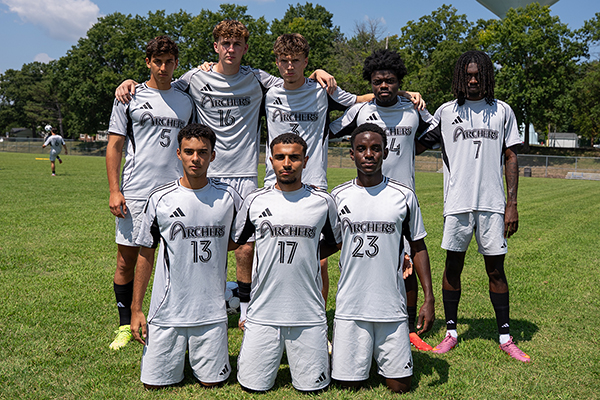
The 2026-2027 Archers roster looks like a mini-World Cup, featuring seven international players who have traveled thousands of miles to play the game they love.
A Global Roster
When you look at the Archers roster, you’ll see names representing players from all over the map. These players come from different backgrounds, speak different languages and grew up eating different foods. But when they step onto the grass at STLCC, they all speak “the universal language” of soccer. The team features players from Argentina, Egypt, Germany, England, Jamaica, Venezuela and Bosnia.
Having seven international players on a team is a big deal. It means the Archers aren't just playing one style of soccer; they’re mixing in the speed of European play, the creativity of South American footwork and the toughness of global competition, making every game exciting to watch.
The Pros: Why Being an International Archer Is Awesome
Being an international student-athlete is a huge adventure. There are so many positives to moving across the ocean to play for STLCC:
- The “Universal Language”: Even if a player is still learning English, they can communicate through a perfect pass or a great goal. Soccer builds friendships that don't need a translator.
- A Stepping Stone: Playing at a community college like STLCC is a great way for international players to get noticed by four-year universities or even professional scouts.
- Sharing Traditions: The locker room is a place where cultures mix. One day a player might share a snack from their home country, and the next, the whole team is learning a new celebration dance.
- A New Perspective: International players get to experience American culture firsthand, as opposed to through a movie or TV screen. So it’s not just U.S. soccer they’re learning, but so much more.
The Cons: The Tough Side of the Journey
It’s not all goals and glory, though. Moving to a new country at 18 or 19 years old is hard work. Here are some of the challenges these players face:
- Homesickness: Imagine being thousands of miles away from your mom’s cooking or your best friends. When the sun goes down, many players find themselves missing home.
- The Weather: For players coming from warm climates, a St. Louis winter can be a total shock. Playing in the cold and wind is a lot different than playing in the tropical sun.
- Language Barriers: While soccer is a universal language, biology class is not! Keeping up with schoolwork while learning a new language takes a lot of grit.
- Transportation and Housing: Without a car, getting around St. Louis can be tricky. The bus doesn't always go where the players need to live, so they have to rely on their teammates for rides.
International Players’ Perspective
For players like Alvaro Sueldo, Ben Connelly and Yousef Ali, the journey to St. Louis was about more than joining a soccer team to chase a ball around. It was about chasing an opportunity.
Sueldo, a defensive back from Argentina, came to STLCC looking for a new path in the game he loves.
“I want to play professionally and was having a hard time finding clubs back home,” Sueldo said. “I hope STLCC can be a steppingstone for my career. The quality and quantity of resources and infrastructure in this country is much better than that of mine. I think I can leverage that to bring my soccer to the next level.”
Connelly, who came from England, had a similar reason for making the move.
“Coach Garza gave me a great opportunity to move to the USA and play for him,” he said. “Football has always been the most important part of my life, so having an opportunity to keep playing at a high level and progressing my game further was an opportunity I could not miss out on.”
“The U.S. offers a great pathway where I can combine my academic studies with soccer, which is much better structured than in Germany,” said Ali, who moved to the U.S. from Germany.
Even though they came from different corners of the world, all three players quickly noticed something special about the team culture at STLCC.
“It most impressed me how committed my teammates were with the team when they were on the bench,” Sueldo said. “They show great support to the players on the field, celebrate every tackle, challenge and clearance with such enthusiasm that made me realize how little we cheer our teammates back in my home country. The game feels more collective like that. Less playing as individuals, more playing as a unit.”
Connelly noticed the same kind of commitment in the way student-athletes approach their sports.
“All the student-athletes here take sports very seriously and everyone wants to improve, which aligns well with me personally and my mindset toward football,” he said. “This is a big similarity to the U.K. and how we treat football.”
But moving across the world is not easy, even when soccer helps make the transition smoother.
“There was this specific day on which I just started to cry. Out of the blue,” Sueldo said. “I was overwhelmed. By what exactly, I could not say. I lay in my bed like a little baby and just kept crying. All I could think of was how far away I was from anyone that could make me feel loved. Of course I got out of it eventually. I had a mission to accomplish in the USA, and crying would not get me any closer to it. Sometimes you just have to put up with the pain and keep going. ‘Just keep swimming,’ as we would say on the team.”
Connelly has also felt the challenge of being away from home, especially while dealing with an injury. Ali said he hasn’t experienced homesickness yet but is diligent about regularly calling home.
For international players, soccer often becomes the easiest way to connect, even when teammates come from different countries and speak different languages.
“I can agree that football is the universal language,” Connelly said. “We have teammates from across the globe who all speak different languages, yet we really don't struggle to communicate.” He added that the only real language barriers have been small ones.
“There are only minor pieces of slang we have in the U.K. I've had to teach,” Connelly said.
Both players have also brought pieces of home with them to St. Louis, in the form of local beverages.
For Sueldo, that means mate, a traditional drink from Argentina and other South American countries.
“Drinking mate is something I — and most Argentines — do every day, like part of a routine almost,” Sueldo said. “It is a kind of green tea that is sipped through a metal straw and served in a special ‘mate’ cup. Its preparing is a whole ritual. And its drinking is an excuse for family and friends gathering.”
For Connelly, home tastes like tea and biscuits.
“I’ve had a few of my teammates try English tea,” he said. “As stereotypical as it is, no one has tried it out here, so tea and biscuits have become a regular occurrence in my apartment.”
The experience has changed both players in ways that go beyond soccer.
“Moving away from my family has been a life-changing experience,” Connelly said. “I think I've matured a lot in the last couple weeks living by myself at 18 and having to figure everything out.”
“Moving to the USA, knowing no one has given me much more confidence in social environments and helped me to make friends and speak to people much easier,” he said.
“This experience is helping me grow as a person,” Ali said. “I’m becoming more independent and learning from living in a different country.”
Connelly’s advice for young players back home is simple: “Believe in yourself and take the chance,” he said. “The whole experience is so enjoyable. You will develop not only as an athlete but as a person moving out of your comfort zone and making new friends. This whole experience is unlike anything I've ever done, and betting on myself is the best thing you can do for yourself.”
For Sueldo, Connelly and Ali, the Archers are more than teammates. They are the people helping make a new country feel a little more like home.
The Coach’s Vision
Building a team with so many different cultures isn't easy. It takes a leader who knows how to bring people together. That leader is Head Coach Ricardo Garza.
Coach Garza doesn't just look for good players; he looks for players who will fit into the STLCC family.
“I want our STLCC team to come together from diverse backgrounds and not just co-exist but create a single unified family on and off the field,” he said. “We create a style of soccer that suits our strengths. We recruited players from Latin countries expecting extreme ball control and composure with an emphasis to attack. We recruited players from Germany to bring strength and power. We recruited from England to bring grit and technical ability. We recruited from Jamaica to bring tenacity and speed.”
He also knows that the game is about more than just winning trophies.
“I've been coaching 20-plus years and many internationals have come to play for us and changed their lives for the better,” Garza said. “Educational and life experiences have been created because of a ball. The soccer ball made a difference for some that was life or death. Some have escaped poverty because of a scholarship. Some have become leaders back in their countries. The game can teach so much off the field, our players learn what they can control, and how to deal with things they cannot control.”
Come See the Action!
The Archers are more than just a soccer team — they are a global community. Whether they are from St. Louis, South America, Europe or anywhere else in the world, these players are working hard to make our city proud.
You don’t want to miss a single minute of the action. You can check out their full schedule and news. So, grab your scarf, bring your friends and come cheer on the Archers.
The World Cup might be over, but the best soccer in St. Louis is just getting started.
Go Archers!