Using AI as a Learning Partner, not a Shortcut
March 24, 2026
Posted by Karana J. Phillips in AI Articles and Guides
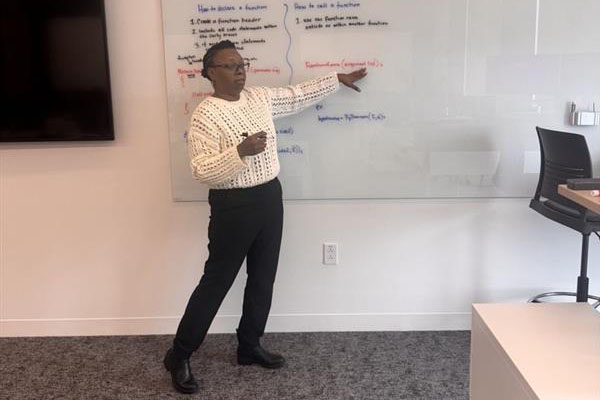
As both an assistant professor and a software developer, I spend a lot of time at the intersection of learning, technology and real-world problem solving. Few topics generate as much curiosity and concern right now as artificial intelligence. Students are using it. Faculty are debating it. Employers are expecting familiarity with it. The question is no longer whether AI belongs in education, but how should it be used.
I want to be clear from the start: AI should not replace learning. But when used intentionally, it can absolutely support learning. The difference lies in whether we treat AI as a shortcut or as a learning partner.
The Shortcut Mentality
When AI is used as a shortcut, the goal is speed rather than understanding. This usually looks like asking for an AI tool to generate a complete answer, code solution or essay with minimal effort from the learner. While the output may look polished, the learning that should have happened never actually occurs.
From an instructional standpoint, this creates several problems:
- Students miss the opportunity to practice problem analysis and critical thinking.
- Errors or inaccuracies in AI generated content go unnoticed because the student doesn’t have the foundational knowledge to evaluate it.
- Long-term skill development, especially in areas like programming, writing, and reasoning, suffers.
Shortcuts feel efficient in the moment, but they weaken the very skills education is meant to build.
Reframing AI as a Learning Partner
A learning partner does not do the work for you; it works with you. When students use AI as a learning partner, they remain actively engaged in the learning process.
In this role, AI can:
- Help clarify confusing concepts.
- Offer alternative explanations when a topic doesn’t “click.”
- Provide practice questions or examples.
- Give feedback on drafts, logic or structure.
- Act as a sounding board for ideas.
The key difference is intent. The learner is still responsible for understanding, deciding and applying.
A learning partner does not do the work for you; it works with you. When students use AI as a learning partner, they remain actively engaged in the learning process.
— Karana Phillips, STLCC professor
How I Use AI as a Software Developer
In professional software development, AI tools are already part of the workflow. Developers use them to:
- Generate boilerplate code.
- Suggest alternative implementations.
- Explain unfamiliar libraries or error messages.
- Review logic for potential improvements.
What AI does not do is replace the developer’s responsibility. I still have to:
- Understand the problem.
- Decide whether the solution is appropriate.
- Test, debug and refine the code.
- Ensure security, performance and maintainability.
This mirrors how students should learn to use AI. The tool assists, but expertise still matters.
What Responsible AI Use Looks Like for Students
From a teaching perspective, responsible AI use means students can clearly explain why something works, not just what the output is. For example:
- In programming, AI can help explain an error message, but the student should still be able to trace the logic and describe how the fix works.
- In writing, AI can help with organization or clarity, but the ideas, arguments and conclusions should belong to the student.
- In studying, AI can generate practice questions, but mastery comes from working through them thoughtfully.
If a student cannot explain their submission in their own words, the learning objective has not been met regardless of how polished the final product appears.
Why This Matters for the Workforce
Employers are not looking for people who can simply prompt an AI tool. They are looking for people who can:
- Think critically.
- Solve problems.
- Communicate clearly.
- Adapt to new technologies.
- Evaluate AI generated information.
AI literacy is becoming a core skill across industries, not just in technology. That literacy includes knowing when to trust AI, when to question it, and when human judgment is essential.
By teaching students to use AI as a learning partner now, we are preparing them for realistic workplace expectations later.
The Role of Educators
As educators, our role is not to ban technology out of fear, nor to embrace it without guardrails. Our role is to:
- Set clear expectations for ethical and responsible use.
- Design assignments that value process, reflection and explanation.
- Encourage curiosity while reinforcing academic integrity.
- Help students develop the confidence to learn with tools, not depend on them.
This often means shifting how we frame assignments and assessments by placing more emphasis on reasoning, iteration and reflection rather than just final answers.
Moving Forward at STLCC
Community colleges play a critical role in preparing learners for what comes next. Our students are diverse in background, experience and goals, but they share one thing in common: they deserve an education that equips them for a rapidly changing world.
AI is part of that world. Used responsibly, it can enhance access, support learning and build confidence. Used carelessly, it can undermine growth and understanding.
The goal is not avoidance. The goal is intentional use.
When students learn to treat AI as a learning partner rather than a shortcut, they gain more than answers; they gain skills that last.
Karana J. Phillips, M.Ed., M.S. is department chair and assistant professor in computer and information technology and program coordinator for database, software and web developer programs at St. Louis Community College.
The views expressed are those of the author and do not necessarily reflect those of St. Louis Community College.
Using AI responsibly in the classroom and beyond
Explore resources for students and faculty to support learning, strengthen teaching
and build real skills.