Student Perspective: Thinking Critically About AI
March 13, 2026
Posted by STLCC in AI Articles and Guides
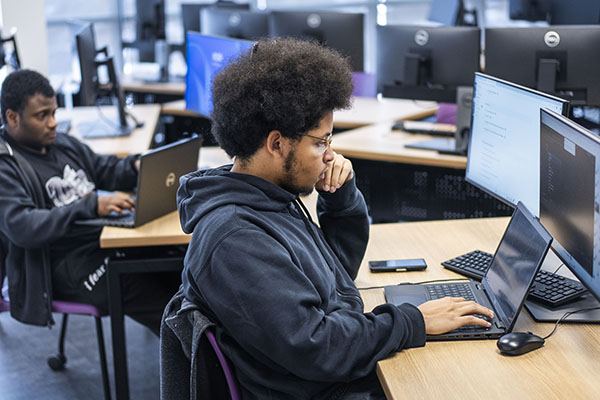
Many students are experimenting with artificial intelligence tools to study, brainstorm ideas and organize their coursework. Some tools can summarize readings, generate practice questions or help explain complex topics.
For many people, using AI already feels normal.
But Jeff Tacina, a student at St. Louis Community College, believes people should pause before accepting every new technology that appears.
“Uncritical, unthinking acceptance of technology is bad for our moral character,” Tacina said.
Tacina has been thinking about how quickly society adopts new tools. New apps, platforms and devices appear constantly. Many people begin using them right away.
But Tacina believes people should ask a simple question first: Do we actually need this technology?
According to Tacina, many companies promote new technology as something consumers cannot live without. When products are advertised as essential, people may feel pressure to adopt them quickly.
“This is a deliberate strategy by inventors and marketers,” Tacina said. “They are playing on our vulnerabilities and gullibility.”
Why Questioning Technology Matters
Tacina believes this pattern affects how people make decisions. Instead of slowing down and thinking about new tools, many consumers accept them without asking how they might change their habits or skills.
“Consumers are not asking themselves the questions they should be asking,” Tacina said.
Artificial intelligence has made these conversations more visible. In classrooms across the country, students and instructors are discussing how AI can help with research, writing and studying.
Many students see AI as a helpful academic tool. It can summarize information, generate practice questions and help explain difficult topics.
If consumers took a more thoughtful approach to technology, Tacina believes innovation might develop differently. New tools might appear more slowly. Some products might never gain popularity. Others might be designed more carefully to meet real needs.
He also believes this approach could strengthen people as individuals.
When people question technology instead of automatically accepting it, they practice judgment and independence. They learn to evaluate what truly benefits them instead of simply following trends.
“People would ask more questions and think more carefully,” Tacina said.
Consumers are not asking themselves the questions they should be asking.
— Jeff Tacina, STLCC student
Questions to Ask Before Using AI
Tacina believes students should pause and think before relying on new technology. Asking a few simple questions can help people decide how AI fits into their learning.
Before using an AI tool, consider asking:
- What problem does this tool actually solve?
- Am I using it to learn, or to avoid doing the work myself?
- Do I understand the information the AI generated?
- Could relying on this tool weaken a skill I need to practice?
- Would I be able to explain this work on my own?
Thinking through questions like these can help students stay thoughtful about how technology shapes their habits and decisions.
Artificial intelligence will likely continue to grow in classrooms, workplaces and daily life. New tools will appear and many will offer real benefits.
But Tacina believes the real challenge is not deciding whether technology will advance.
The challenge is deciding how thoughtfully people choose to use it.
Using AI responsibly in the classroom and beyond
Explore resources for students and faculty to support learning, strengthen teaching
and build real skills.