Industrial Jobs You Can Start Without a Four-Year Degree
May 30, 2025
Posted by School of Advanced Manufacturing, Industrial Occupations and Transportation in Programs and Pathways
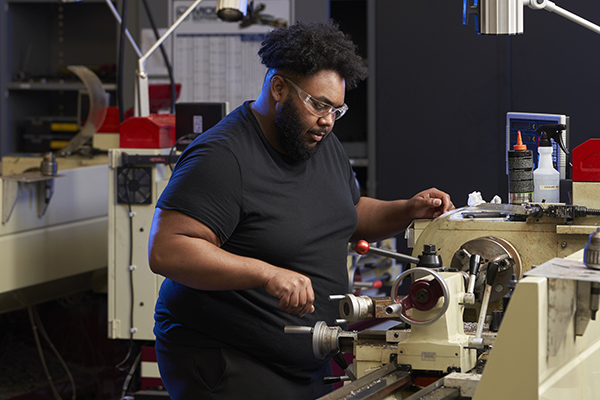
Not every good career starts behind a desk. If you like working with your hands, solving practical problems and learning skills you can use on the job, an industrial career could be a strong fit.
St. Louis Community College’s industrial and skilled trades programs can prepare you for hands-on technician roles in manufacturing, maintenance, HVAC, transportation and other technical fields. Many of these careers offer strong demand, solid pay and a faster path to work than a traditional four-year degree.
What Are Industrial Jobs?
Industrial jobs focus on building, repairing, maintaining or improving the systems and equipment people rely on every day. Depending on the role, that can include manufacturing parts, troubleshooting machinery, maintaining electrical systems, working with heating and cooling systems or supporting transportation equipment.
STLCC’s pathway introduces students to a wide range of technical areas, including fabrication design, manufacturing, geospatial technology, robotics, automation, controls and industrial maintenance. That variety can help you compare options and find work that fits your strengths.
Why Technician Careers Appeal to Hands-On Learners
Technician careers are often a good fit for students who like fixing, building, testing or troubleshooting. The work is active, skill-based and connected to real results, which can feel more rewarding than sitting behind a desk all day.
These careers can also help students enter the workforce sooner. STLCC students in fields such as machining, automotive technology, diesel technology, welding and remote aircraft technology may start building job-ready skills before graduation. Some may even qualify for work after only a few classes.
Industrial Jobs You Can Start Without a Four-Year Degree
One of the biggest advantages of industrial careers is that many roles do not require a bachelor’s degree to get started. STLCC programs prepare students for technician roles, and many students begin working with a certificate, certification, technical diploma or associate degree.
Some roles require more training than others, but each option can give students a practical starting point for entering the workforce sooner.
What Makes Industrial Training Different?
Industrial training is built around practice. Students learn by using tools, reading technical instructions, working with equipment and solving problems that look like the ones they may face on the job.
That kind of training can be helpful for students who learn best by doing. Instead of only studying ideas in a classroom, students can connect what they learn to real tasks, systems and workplace expectations.
For many students, that hands-on experience makes the path feel more concrete. They can see what the work is like, build confidence over time and decide which technical field fits them best.
What You’ll Learn in STLCC’s Industrial Programs
Students in STLCC’s industrial programs build practical skills that support real workplace needs. You may learn how to plan projects, understand electrical and electronic systems, operate equipment and maintain or repair key systems.
Depending on your program, you may design and make parts, troubleshoot equipment, support electrical systems, work with heating and cooling systems or maintain transportation-related equipment. Over time, you can continue building industry certifications to grow your skills and expand your career options.
How Much Can You Make in an Industrial Career?
Skilled Trades Pay Off
Installation, maintenance and repair occupations had a median annual wage of $58,230 in May 2024, higher than the median annual wage for all occupations.
Source: U.S. Bureau of Labor Statistics
Pay depends on the field, your experience and the employer, but industrial careers can lead to strong earnings. Some roles, like welding, can offer a faster route to higher pay. Emerging fields such as drone technology can also be lucrative.
In some cases, students may be able to step into roles earning around $50,000 after a short period of training. Not every student will follow the same timeline, but these careers continue to attract interest because they offer a solid living, room to grow and a clear connection between training and work.
How to Keep Moving Up in the Field
Getting started is only one step. STLCC encourages students to keep building their skills through certificates, associate degrees, industry certifications, networking and local industry connections.
Events, conferences, seminars and workshops can also help students grow their knowledge and learn about new opportunities. Many industrial careers grow over time. Some technicians stay in hands-on roles, while others continue their education and move into more advanced technical or engineering-related positions.
Build Skills for Work That Keeps Things Moving
Industrial careers support the systems people rely on every day, from transportation and manufacturing to building maintenance and skilled repair. STLCC can help you find a training path that matches your interests, timeline and goals.
Compare Industrial Programs
Review hands-on training options and choose a path that fits the kind of work you want to do.