STLCC Interior Design Students Support Veterans
November 11, 2026
Posted by STLCC in Programs and Pathways
Innovative Interiors for Valiant Veterans
When most people think about interior design, they might picture TV shows like "Fixer Upper" with Chip and Joanna Gaines or "Property Brothers" with Drew and Jonathan Scott. Between paint swatches, fabric samples and wood tones, it’s easy to get caught up in creating the perfect space.
But what if interior design could do more? What if it could connect students to their community and help people who need it most?
Serendipity Strikes STLCC’s Interior Design Program
STLCC interior design assistant professor Marica Paljakka-Cargo has admired the work of the Veterans Community Project (VCP) since it came to St. Louis in 2021. VCP is a nonprofit that creates tiny home villages for veterans experiencing homelessness.
“I have been deeply impressed by the Veterans Community Project,” Paljakka-Cargo said. “To provide a supportive community for homeless veterans is incredibly powerful, and watching VCP create such a positive impact on the local homeless community has always been inspirational.”
Paljakka-Cargo wanted to include a service project in her course so students could put what they learned in class into action. At first, they expected a day of hands-on work, such as landscaping, painting and maybe even using a power tool or two.
But when Paljakka-Cargo reached out to Deshauna Barber-Echols, VCP St. Louis executive director, the class was offered a project that was right up their alley: helping design spaces at the VCP tiny home village.
A Design Challenge with Real Impact
Located at 1515 N. Grand Blvd. in St. Louis, the VCP St. Louis campus covers nearly four acres and serves veterans experiencing homelessness.
Once complete, the village will include 50 fully furnished tiny homes for individuals and families. It also will have a 3,000-square-foot village center with a kitchen, wellness spaces, classrooms and more, according to the VCP website.
Veterans can live in the tiny homes without paying rent or utilities for 12–18 months. They also have access to VCP resources that can help them find jobs and move toward stable housing.
VCP's Community Building had two areas that needed updates: the computer stations and flex room.
“The computer station will give the veterans a functional resource area where they can conduct job searches and research,” Paljakka-Cargo said. “The flex room design will be versatile and be a comfortable space where residents can relax, play games and catch up with one another, while making sure the space remains functional and comforting for private intake interviews.”
Students in the Interior Design III classes are working on plans for the spaces this semester. Along the way, they are learning about building systems and architectural details. But this project goes beyond a typical classroom assignment. Students also are thinking about how design can create spaces that feel physically and emotionally safe.
They are using Americans with Disabilities Act (ADA) guidelines to make the spaces accessible to veterans with disabilities. They also are exploring trauma-informed design. That can include providing views of nature when possible and using lighting that helps create a comfortable environment.
The goal is simple: create spaces that work well and help residents feel safe and welcome.
Community Partnerships Help Those in Need
Veteran homelessness remains a challenge across the country. The Veterans Community Project works to address that challenge through its tiny home villages and support services.
VCP was founded in Kansas City in 2016 by a group that included combat veterans. What started as conversations around dining room tables grew into a larger effort to help end veteran homelessness. The organization broke ground on its St. Louis village in 2021.
VCP offers walk-in resources such as snack bags and hygiene kits. Veterans also can make appointments for services such as benefits navigation and career coaching.
Another important part of VCP's approach is that residents can keep their pets. For veterans who have a close bond with a dog or cat, being able to bring that companion into their new home can make a big difference.
VCP had already created a welcoming community. STLCC's interior design students now have the chance to help make its shared spaces even better.
Supporting Veterans On and Off Campus
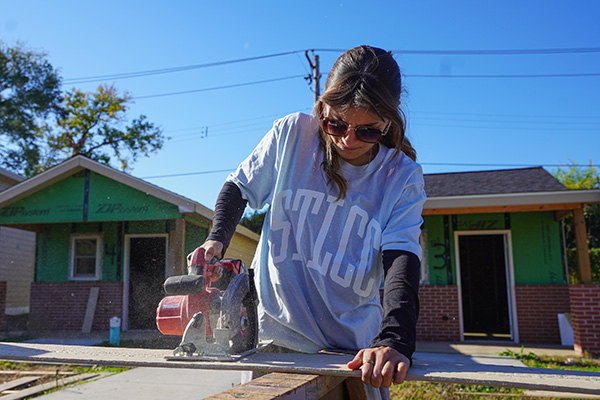
STLCC's Interior Design Club also spent a day volunteering with VCP, giving students an up-close look at how the 240-square-foot tiny homes are built.
“I learned how to use different types of power tools, like a nail gun and circular hand saw,” said student Marlie Angelica. “I also learned how to properly measure, cut and attach siding to a house.”
Students and professors painted walls, cleaned bathrooms and dug holes. Despite the hard work, the mood stayed light. Students laughed and worked side by side as they installed siding and tackled other projects.
The volunteer experience also gave students a better understanding of the people they were designing for. Seeing the tiny homes firsthand helped them think differently about how interior spaces can support residents in their daily lives.
STLCC also supports veterans and active-duty military members as they work toward their educational goals.
The Veterans Resource Center on each campus offers a welcoming place to connect, find guidance and ask questions. Learn more about STLCC's resources for veterans.
Learning Beyond the Classroom
Connecting classroom lessons with real-world projects can be a powerful way to learn.
Service learning gives students a chance to build confidence, gain career experience and learn more about their community. It can also make classroom lessons more meaningful by showing students how their skills can make a difference.
The VCP project gave students a closer look at homelessness in the St. Louis region and the challenges some community members face.
Students left their VCP service day with more than new construction skills. They also left with a better understanding of how something as basic as a safe place to live can affect a person's life.
What began as a service opportunity became a powerful lesson in thoughtful design. Through their work with the Veterans Community Project, STLCC students discovered that interior design is about more than creating beautiful spaces. It's about improving lives, building community and helping people feel at home.
Interior Design at STLCC
Want to make a difference through interior design?
The interior design program at STLCC prepares students to create spaces that are functional, comfortable and visually appealing. Students learn important industry skills, including drafting and digital design software, while gaining hands-on experience that can prepare them for a career.
At STLCC, students can build those skills at an affordable cost while learning how good design can make a real difference in people's lives.