More Than Accommodations: How STLCC’s Access Office Empowers Students
October 08, 2026
Posted by STLCC in Student Resources
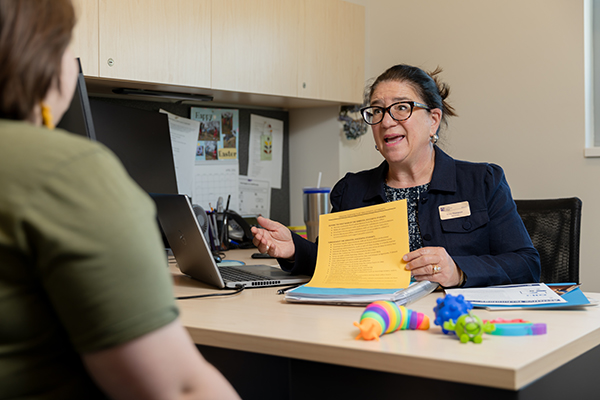
For some college students, success means having the right book, finding a quiet place to study or getting help from a tutor. For other students, success can begin with something as simple as having enough time to finish a test, being able to record a lecture or knowing there is someone on campus who understands what they need.
That's where the St. Louis Community College Access Office steps in.
The Access Office works with students with disabilities to provide reasonable accommodations and help remove barriers to learning. Support can include testing accommodations, course materials and class notes, assistive technology, Deaf services and much more. The office can also help students with temporary disabilities or injuries.
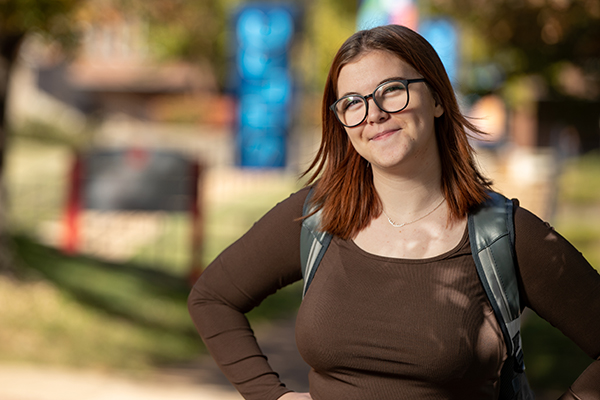
But for Taylor Johnson, a second-year student at STLCC-Florissant Valley pursuing a degree in general transfer studies, the Access Office is about more than a list of services. It is also about confidence, self-advocacy and knowing where to turn for support.
“I feel more equipped to handle higher education and be a better advocate for both myself and others with disabilities,” said Johnson.
October is Disability Awareness Month, making it a good time for the STLCC community to learn more about accessibility, inclusion and the experiences of people with disabilities.
Getting Started
College can bring new challenges for any student. For students with disabilities, those challenges may include barriers that other students do not see.
Geoffrey Littleton, manager of the Access Office at STLCC-Forest Park, said the office works to make the process of receiving support as easy as possible.
“Our office should offer the least amount of barriers to students with disabilities and disabling conditions,” Littleton said.
Students who may need accommodations are encouraged to begin the process early. Accommodations generally are not retroactive, so starting early gives the office and instructors more time to put support in place. The process is also personal. Accommodations are considered based on each student's individual needs.
Students who think they may need accommodations can:
- Schedule an initial appointment through Navigate with the Access Office on their campus.
- Stop by their campus Access Office.
- Email DWAccess@STLCC.edu.
- Complete the required forms with help from Access Office staff.
A Few Extra Minutes Can Make all the Difference

A student uses the sensory room at STLCC-Meramec’s Access Office, a space designed to support comfort, focus and student well-being.
Testing accommodations are among the most common supports provided through the Access Office. Littleton said many students need additional time because of the way their disabilities affect focus, processing or physical tasks.
For example:
- A student with ADHD may need additional time and a quieter environment to focus and refocus.
- A student experiencing a panic event may need time to use breathing or other techniques before continuing an exam.
- A student with a physical disability may need more time to complete certain tasks.
“These things may seem simple,” Littleton said, “but they can make a big difference.”
Johnson knows that difference firsthand. Her disability causes her to ruminate, which can make time pass quickly during tests.
“Even an additional 10 minutes has kept me on the path to success,” she said.
Having accommodations has been especially meaningful this semester because Johnson is taking her first in-person class.
“Knowing that I have my accommodations has lessened the anxiety I feel in a classroom setting and allows me to better focus on my lecture,” she said.
Support That Works Beyond the Test
Jared Bowman, a student studying network security engineering, said that his experience with the Access Office at STLCC-Forest Park has been excellent.
“The staff are really nice and understand what students are going through,” Bowman said.
Some of the supports he uses are extended time on tests/quizzes, an alternate testing location through the testing center and permission to record lectures using his phone or an audio recorder.
Bowman said he naturally takes longer to complete tests, and having extra time has helped him minimize missed questions. And his ability to record lectures has also been valuable to him.
“Because of my ADHD, I tend to forget a lot of information,” Bowman said. “Being allowed to record the lectures and listen to it after class has helped.”
These are examples of how accommodations can remove barriers without changing what a student is expected to learn.
Accommodations Are Not Special Treatment
One common misunderstanding about disability accommodations is that they give students an unfair advantage.
Johnson sees it differently.
“Accommodations are not ‘getting special treatment,’ but rather adjusting preexisting rules to better fit more people,” she said.
The goal is access.
Students still complete their coursework and meet course requirements. Accommodations address disability-related barriers so students can participate in their classes and demonstrate what they know.
For Johnson, that can mean having the confidence to focus on learning instead of worrying about whether she will have the support she needs.
Disabilities Are Not Always Visible
Another important factor to keep in mind is that disabilities are not always obvious.
Littleton said students may have disabilities such as:
- Attention Deficit Hyperactivity Disorder (ADHD)
- Anxiety
- Depression
- Post-Traumatic Stress Disorder (PTSD)
- Bipolar disorder
These and other conditions can affect a student's experience in college and may qualify for accommodations. But they’re typically not apparent when just looking at a student.
Bowman also wishes more students knew that the Access Office is not only for people with long-term disabilities.
When he first came to STLCC, he was unsure how his high school Individualized Education Program, or IEP, would transfer to college. After meeting with an Access Office specialist, he found the transition easier than expected.
“I was pleasantly surprised at how easy the transition was,” he said.
He later learned that the Access Office can also support students with temporary disabilities or injuries.
For example, a student recovering from a broken arm may need temporary assistance with writing or other classroom tasks.
The bottom line is, if you are unsure whether the Access Office can help with your situation, please reach out.
Finding Your Voice
For Johnson, one of the most important things she has learned is that the Access Office does more than arrange accommodations.
“I wish I had known that it is not just about accommodations but also about giving students with disabilities a voice and someone to champion for their rights as a disabled student,” she said.
That lesson in self-advocacy can continue long after a student leaves STLCC.
College students have more responsibility for communicating their needs than they may have had in high school. The Access Office can help students understand their accommodations and communicate with instructors.
“You can’t get help you don’t ask for,” Johnson said, knowing the importance of speaking up, but also understanding why some students might hesitate to do so.
Before contacting the Access Office, she worried that some of her accommodations might seem unusual or too much to ask. One of her accommodations allows her to wear a skull cap or beanie.
“I was unsure if it would be taken seriously — but it was no issue!” she said.
Students do not need to decide on their own whether a request is “too much” or “not important enough.” They can start with a conversation.
Everyone Has a Role in Accessibility

Every student deserves to feel heard and supported. STLCC’s Access Office helps remove barriers to learning and encourages students to find their voice.
Creating an accessible campus is not only the responsibility of the Access Office — everyone can help.
Littleton encourages STLCC students, faculty and staff to pay attention to their surroundings.
Something as ordinary as leaving a backpack in a busy walkway can create a serious trip hazard. Automatic doors are also used by many members of the campus community, and a broken accessibility button should be reported right away.
Small actions can make a difference:
- Keep walkways clear.
- Report broken accessibility features.
- Be aware of how your actions affect others.
- Offer help when appropriate.
- Treat students with disabilities like any other member of the STLCC community.
- Listen and learn from people's experiences.
Johnson also encourages students to support their classmates who may have disabilities.
“Whether that’s campaigning for more accessible campuses, offering a hand or just treating them like you would any other person,” she said. “Remember most of us are looking to have the same college experience as you!”
Bowman has an equally simple message: “Say ‘Hi’ to people. Introduce yourself. You never know what someone is going through.”
October Is Disability Awareness Month
October is Disability Awareness Month, and this observance can help start conversations that need to happen on college campuses, in workplaces and in public spaces.
Littleton points to the Americans with Disabilities Act, or ADA, as an important part of the history of disability rights in the United States. The ADA became law in 1990 and established broad civil rights protections for people with disabilities.
But awareness is about more than learning a date or a law, it is also about listening to people's experiences.
Littleton said STLCC events such as speaker programs and expression expos give people with disabilities opportunities to tell their stories in their own way.
Get involved at STLCC
Johnson encourages students to take part in Disability Awareness Month activities at STLCC.
She also highlighted A.C.E., the Accessibility Council of Equality, a club at Florissant Valley. She also happens to be the vice president of A.C.E. at her campus.
“If you are at a different campus, consider starting your own disability club,” she said.
Students who need an accommodation for an STLCC event should contact the event organizer or Access Office as early as possible.
Asking for Help Is a Strength
College is a journey, and every student takes a different path.
For Johnson, the Access Office has helped her feel more prepared for higher education and more confident as an advocate.
For Bowman, accommodations have helped him spend less time worrying about how long a test will take and more time showing what he knows.
For Littleton, the work comes down to removing barriers and helping students access the education they came to STLCC to pursue.
And for students who are unsure whether they should reach out, Bowman has advice worth remembering: “It’s better to ask for support and not need it than need support and not have it.”
The Access Office is available to all STLCC students. Online students can contact any campus Access Office for accommodation needs.
Students can learn more about services and how to get started by visiting the STLCC Access Office webpage.
“You can’t get help you don’t ask for,” Johnson said.