Could Sonography Be Your Next Career Move?
March 18, 2026
Posted by School of Health Professions in Programs and Pathways
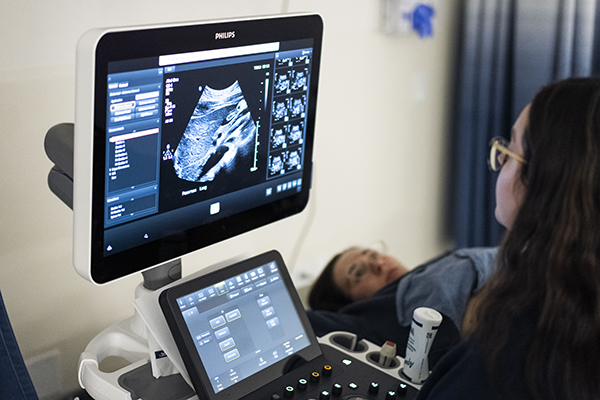
Sonographers use ultrasound technology to create images that help doctors evaluate medical conditions, monitor pregnancies, assess blood flow and guide patient care. Their work goes beyond taking images. Sonographers think in real time, adjust exams as needed and communicate with patients and medical teams throughout the process.
If you’re interested in health care, technology and direct patient care, sonography may be a career worth exploring. It takes focus, strong attention to detail and the ability to help patients feel comfortable during exams.
This guide explains what sonographers do, how to become a sonographer in Missouri and how STLCC’s diagnostic medical sonography program can help you prepare for certification and entry-level work.
Sonographers use ultrasound equipment to scan areas of the body such as the heart, blood vessels, liver, kidneys, pancreas and reproductive system. They help physicians evaluate symptoms, monitor health conditions, support pregnancy care and guide some procedures.
“Sonographers are the eyes of the doctor,” says Lauren Pellegrini, program chair of the diagnostic medical sonography program at STLCC. “We tailor our exams to the reason a patient came in — their symptoms, where they’re feeling pain and how long it’s been going on. We write up our impressions of the exam, and the doctor reviews our images and assessments before making a final diagnosis.”
Because ultrasound happens in real time, sonographers need to understand anatomy, know what images to capture and recognize when something may need closer review.
Your Path to Sonography
Becoming a sonographer takes classroom learning, hands-on practice and clinical experience. At STLCC, students build skills in a program accredited by the Commission on Accreditation of Allied Health Education Programs (CAAHEP) before preparing for certification and entry-level work.
1. Meet requirements
Complete required education, prerequisites and any program admission steps.
2. Explore the field
Shadow a sonographer to learn what the work is like and which specialty may fit you.
3. Complete training
Finish classroom, lab and clinical training in a CAAHEP-accredited program.
4. Prepare for certification
Graduate, prepare for credential exams and apply for sonography jobs.
What a Typical Day Can Look Like

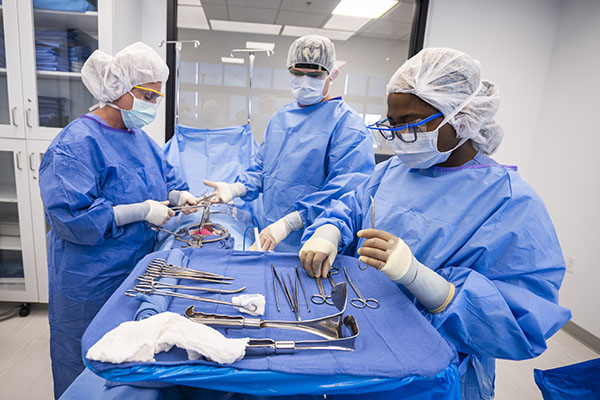
Sonography students learn to use specialized equipment to support patient care.
A sonographer’s day can vary by specialty and workplace. Some work in hospitals, while others work in outpatient clinics, physician offices or specialty labs.
During a shift, a sonographer may see several patients, explain exams, position patients, perform scans, capture images and document findings for the physician. Some may also assist with ultrasound-guided procedures or take part in on-call coverage for urgent cases.
On a typical day, a sonographer may:
- Review exam orders and patient history.
- Explain the procedure and answer basic patient questions.
- Position patients and use ultrasound equipment to capture images.
- Adjust the exam based on what appears on the screen.
- Document findings for a physician to review.
- Communicate with the care team when findings need quick attention.
- Follow safety, privacy and equipment procedures.
Is Sonography a Good Fit for You?
Sonography can be rewarding, but it is also demanding. It may be a good fit if you want a health care career that combines science, technology and patient care.
You may enjoy sonography if you:
- Like anatomy, physiology and medical imaging.
- Want to work directly with patients.
- Can stay focused and detail-oriented.
- Are comfortable learning equipment and technology.
- Can think critically and adjust when something changes.
- Show empathy when patients feel nervous or uncomfortable.
- Are ready for a challenging, full-time program.
Pellegrini recommends shadowing a sonographer before choosing the field.
“There’s been an increase in interest in sonography lately, particularly on social media, but I’d always recommend shadowing so you can really understand what sonography is all about, and whether it’s for you,” she says. “It will also help you know which area of sonography you want to focus on.”
She also wants students to understand the commitment before they start.
“Ultrasound school is hard. I won’t sugarcoat it. But as long as you’re willing to put the work in, you can do it,” Pellegrini says.
Why Program Accreditation Matters
When comparing sonography programs, accreditation is one of the most important things to check. STLCC’s diagnostic medical sonography program is accredited by the CAAHEP.
Accreditation matters because it can affect your eligibility for certification exams after graduation.
“If a sonography program is not CAAHEP accredited, students cannot sit for their board exams. If you can’t sit for boards, you can’t work,” Pellegrini says.
Choose a Sonography Specialty
Sonography includes several specialty areas. STLCC students can prepare for abdominal-extended and obstetrics and gynecology sonography, adult cardiac sonography or vascular sonography.
Credentialing organizations may include the American Registry of Diagnostic Medical Sonographers (ARDMS) and Cardiovascular Credentialing International (CCI).
| Specialty | What You’ll Learn | Credential Path |
|---|---|---|
| Medical Sonography | Scan organs such as the liver, gallbladder, pancreas, kidneys and spleen. You’ll also learn imaging related to pregnancy and reproductive health. | May prepare you for Abdomen and OB/GYN credentials through ARDMS. |
| Cardiac Sonography | Capture images and video of the heart, take measurements and help check how well the heart is working. | May prepare you for the Adult Echocardiography credential through ARDMS. |
| Vascular Technology | Study arteries, veins and blood flow. You’ll learn how to check circulation, narrowed vessels and possible blood clots. | May prepare you for credentials through CCI or ARDMS, depending on requirements. |
Each track includes classroom learning, lab practice and clinical experience to help you build skills for your chosen specialty.
What to Look for in a Sonography Program
A strong sonography program should prepare you for both certification and real patient care. As you compare programs, look for:
- Accreditation: A CAAHEP-accredited program can help graduates meet certification exam eligibility requirements.
- Clinical training: Hands-on experience in health care settings helps you build confidence with patients and equipment.
- Specialty options: Different tracks can help you prepare for the area of sonography that fits your interests.
- Certification preparation: A strong program should help you prepare for board exams and entry-level work.
- Student support: Advising, tutoring and other resources can help you manage a demanding program.
Clinical Training at STLCC

The program prepares students to perform ultrasound exams and evaluate the images they collect.
STLCC students complete practicum and clinical rotations in real health care settings with patients and registered sonographers. These experiences help students connect classroom learning with patient care.
Students may complete rotations at hospitals and clinics in the St. Louis region, including academic teaching hospitals and pediatric settings. These placements can expose students to a wide range of cases and clinical environments.
STLCC also reports three-year averages above 90% for credential success and employment outcomes for the program.
Take Your Next Step to Becoming a Sonographer
If you want to become a sonographer in Missouri, STLCC’s diagnostic medical sonography program offers CAAHEP-accredited training, specialty options and clinical experience in the St. Louis region.
You’ll build the technical skills, clinical judgment and patient care experience needed to prepare for certification and entry-level medical sonography careers.
Prepare for a Career in Sonography
Learn about STLCC’s diagnostic medical sonography certificate, specialty tracks, admission requirements and clinical training.