How Culinary School Can Help You Start a Hospitality Career
May 11, 2026
Posted by School of Business, Culinary Arts and Hospitality in Programs and Pathways
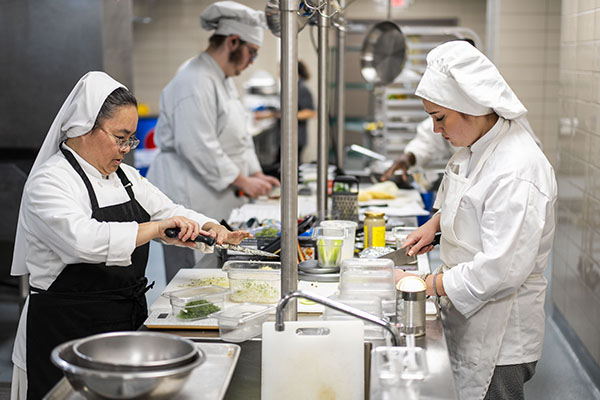
Starting a career in hospitality takes more than talent and hard work. It takes training, practice and guidance from people who know the field inside and out. The St. Louis Community College culinary arts program gives future chefs and hospitality professionals a focused path toward real skills.
Instead of guessing your way through recipes or hoping a busy kitchen manager has time to teach, students follow a clear plan. They learn knife skills, food safety, menu design, teamwork and time management in one place.
Learning on the job can help, but that path often moves slowly. New hires may wash dishes, prep vegetables or run food while experienced chefs handle the cooking. Weeks or months might pass before anyone explains why sauces break, how flavor balance works or how food costs affect a kitchen.
Culinary school helps speed up that learning process. Classes cover classic and current techniques, kitchen math, nutrition, supervision, management, baking and pastry and service standards. Students practice every day, make mistakes in a safe setting and improve with feedback.
“Students have the chance to get invaluable hands-on learning experiences under the guidance of certified chefs while being exposed to different ingredients, techniques and equipment,” said Ellen Piazza, a professor in the program.
Culinary School vs. On-the-Job Training
Many people who want to work in a restaurant kitchen wonder which path is better: culinary school or restaurant experience. Both can help, but they do different things.
Working in a restaurant can teach a lot, especially how fast a kitchen moves and how much teamwork matters during service. But new cooks are often learning one menu, one station and one employer’s way of doing things.
Culinary school gives students a wider starting point. At STLCC, students build skills in a planned order, from knife cuts and food safety to cooking methods, sanitation, allergen awareness and different cuisines. Instead of learning only one menu, students build a foundation they can use in many food service settings.
That broader training can help students feel more prepared for restaurants, catering companies, hotels, country clubs, retirement communities, hospitals, corporate cafeterias and large dining centers.
It can also help students choose a direction with more confidence. Some graduates move into fine dining, while others build careers in catering, corporate dining, health care kitchens or other food service settings.
What Culinary School Teaches That On-the-Job Training May Not
Restaurants move fast. During service, there is not always time to explain the why behind each task. Culinary school helps students build that deeper understanding before they are expected to perform in a busy kitchen.
Students learn:
- How heat and food science affect ingredients.
- Why seasoning builds layers of flavor.
- How plating can improve presentation.
- Ways to manage ordering, inventory and cost control.
- How to identify products and use ingredients efficiently to reduce waste.
These lessons can help students become stronger cooks, better problem-solvers and future kitchen leaders.
Students Build Essential Culinary Skills at STLCC
Students in the culinary program practice the skills they will use in real kitchens. Through hands-on labs and guided instruction, they build:
- Knife skills and prep speed for safe, efficient kitchen work.
- Cooking techniques such as sautéing, roasting, braising, grilling and baking.
- Professional communication for calling orders, listening closely and working as a team.
- Problem-solving skills for busy kitchen environments.
- Leadership and planning skills through group projects and culinary labs.
- Professional habits like arriving on time, wearing proper uniforms, following sanitation rules and supporting coworkers.
These habits matter in restaurants, hotels, country clubs and corporate kitchens. Employers notice graduates who already understand kitchen flow, teamwork and professional conduct.
Kelly L. Spencer, a 2009 STLCC culinary arts graduate and founder of The Social Affair at The Dogwood in the Grove neighborhood of St. Louis, said the program helped shape her career and her approach to leadership.
“St. Louis Community College-Forest Park truly laid the foundation for my career,” Spencer said. “The program challenged us every day to become better chefs, stronger leaders and more thoughtful people.”
Spencer said the instructors were accomplished, passionate about teaching and serious about the craft of cooking. They pushed students to meet high standards, build discipline and take pride in their work.
Why STLCC Works for Culinary Students

Choosing a culinary program is about more than finding a place to take cooking classes. Students need training that is affordable, close to real hospitality employers and taught by people who understand the industry.
Train Near St. Louis Hospitality Employers
STLCC-Forest Park brings those pieces together. The campus is located in the City of St. Louis, near restaurants, hotels, country clubs, hospitals, catering businesses and corporate dining centers. That location can help students connect what they learn in class with the kind of work happening across the region.
Many students work part time, complete training or build experience near campus while taking classes. Shorter commutes can make it easier to balance school, work and life. The St. Louis area also gives students several food service paths to consider, including fine dining, fine casual dining, banquet and catering work, independent restaurants, health care kitchens, large company cafeterias and country clubs.
“STLCC helped me build the skills I needed to start my career,” said Joe Frandsen, a 2012 graduate now with Nicky’s Slices Pizza Club. “The small class sizes gave a great opportunity to work close with the chefs on my knife and cooking skills that I use every day.”
Keep Culinary Training More Affordable
Affordable training can open the door for career changers, parents, veterans and first-generation college students. Students may be able to use financial aid, scholarships, grants or workforce programs to help with college costs. Shorter programs can help students build skills and move into employment more quickly.
Learn From Chefs With Industry Experience
STLCC culinary instructors bring years of real-world experience. They have cooked on professional lines, managed kitchens, planned banquets and led teams. They teach from firsthand knowledge, not just textbooks.
Those instructors also share industry stories, practical tips and honest advice. They can help students polish resumes, practice interviews and connect with hiring managers, job leads, internships and mentors.
“Due to the longevity of our program, our graduates are in leadership positions locally and nationwide,” Piazza said.
Because instructors have worked across restaurants, hotels and catering companies, they understand what employers want. They teach punctuality, teamwork and pride in the craft. They also encourage creativity by pushing students to experiment with flavors, respect cultural food traditions and develop personal style.
Build Skills in a Professional Kitchen Setting
Inside the program, students practice in professional kitchen settings with guidance from certified chefs. Classes build technical skills, workplace habits and confidence while giving students a look at different career paths in food service and hospitality.
The program is accredited as Exemplary by the American Culinary Federation, which recognizes culinary programs that meet high standards for education and training.
Together, the location, cost, faculty experience and hands-on training give students a practical way to prepare for real work, not just entry-level kitchen tasks.
From Culinary Classroom to Career
Culinary school at STLCC does not end at graduation. Alumni often return to recruit students, offer internships or share advice. That cycle builds a strong local network, and each graduating class helps strengthen the next.
Students also learn how hospitality supports communities. Restaurants bring people together. Country clubs host celebrations. Corporate cafeterias fuel busy workers. Graduates can take pride in feeding others and creating welcoming spaces.
Start a Hospitality Career With Culinary School
Hospitality needs passionate people who care about food and service. Culinary school helps that passion grow into skill, confidence and career direction.
For students who want a smart, practical start in the field, STLCC offers training that combines education, experience and opportunity in one place.
Start Your Culinary Career at STLCC
Learn about STLCC’s culinary arts program, hands-on training, career paths and hospitality opportunities.